
Overview
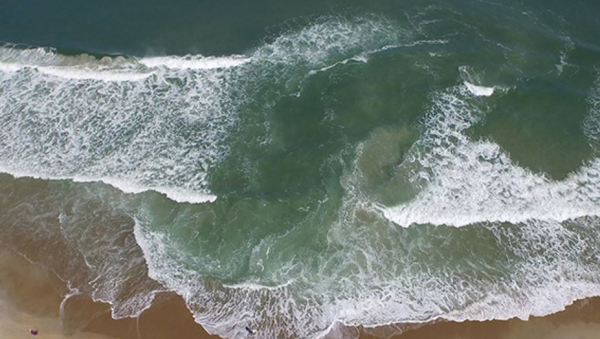
A rip current is a powerful, narrow channel of fast-moving water that flows from the shore back out to the ocean. They usually form at breaks in sandbars or near permanent structures like piers and jetties. When waves break, water piles up on the shore and needs a way to get back out, creating the rip current.
Dangers of Rip Currents
The primary danger of a rip current isn't that it pulls you under, it’s that it pulls you away from the shore. Rip currents can flow faster than an Olympic swimmer (up to 8 feet per second) and swimmers often exhaust themselves trying to swim straight back to shore against the current.
How to Spot a Rip Current
Before you get in the water, take a few minutes to watch the waves. It helps if you can look from an elevated spot like a sand dune or the boardwalk. The water in a rip current often looks calmer than the surrounding waves, tricking people into thinking it’s the safest place to swim. Watch out for a calm break in between crashing waves. Rip currents can cause water to churn, appearing muddy, sandy, or foamy compared to the rest of the ocean. Keep an eye out for debris such as seaweed or foam moving steadily away from the shore.
What to Do if Caught in a Rip Current
Stay calm and conserve your energy. The most important rule is don't fight the current. Instead, swim in a direction parallel to the shoreline until you are out of the current. Once you feel the pull weaken and see waves breaking again, swim back to shore at an angle. If you can’t swim out of it, float or tread water and call for help. Try to face the beach, wave your arms, and yell for help.
How to Help Someone Else
If you see someone struggling in a rip current, do not jump in after them unless you are a trained lifeguard. Many drownings occur when would-be rescuers become victims themselves. Signal a lifeguard immediately. If there isn’t a lifeguard, call 9-1-1. If you have a surfboard, boogie board, life jacket, or other floatation devices, throw it to them. Anything that floats can help save a life. Shout instructions to the person in the water. They are likely panicking and need a clear voice. Tell them to float to conserve energy and direct them to swim parallel to the shoreline. This is the only way to escape the pull of the current before heading back to land.
Check Beach Conditions
Before heading to the beach, check the local beach conditions.
Currituck County: Carova and Corolla.
Dare County: Duck, Southern Shores, Kitty Hawk, Kill Devil Hills, Nags Head and Manteo. To receive beach related weather alerts from the National Weather service, text OBXBEACHCONDITIONS to 77295.
Carteret County: Atlantic Beach, and Emerald Isle.
Onslow County: North Topsail Beach, Ocean City Beach.
Pender County: Surf City and Topsail Beach.
New Hanover County: Wrightsville Beach, Carolina Beach and Kure Beach.
Brunswick County: Bald Head Island, Caswell Beach, Oak Island, Holden Beach, Ocean Isle, and Sunset Beach.